Horse Hoof Care
Home / Horse Hoof Care
Horse Hoof Care
Professional care to maintain strong, balanced, and functional hooves
Hooves are one of the most important parts of a horse’s mobility, stability, and well-being. Every step, run, or movement generates forces that must be properly absorbed and distributed through the limbs. For this reason, keeping the hooves in good condition is essential to help prevent problems and maintain proper movement.
At Pepe’s Horseshoeing, we offer professional Horse Hoof Care services focused on the maintenance, balance, and regular care of the hooves. Our goal is to maintain a balanced and functional foundation that helps the horse move more comfortably and allows us to identify changes or conditions that may require specialized attention in a timely manner.
What does our Horse Hoof Care service include?
1 - Hoof Condition Assessment
Before beginning the work, we visually examine the hooves to identify their overall condition, wear, growth, and possible irregularities. We observe the shape of the hoof, its balance, and the way the horse bears weight on each limb.
This assessment allows us to determine what type of maintenance each hoof needs and whether there are signs indicating the need for more specialized attention.
2 - Hoof Trimming and Maintenance
Trimming is a fundamental part of regular hoof care. We remove excessive growth and maintain the hoof while working to preserve a balanced and functional shape.
The work is adapted to each horse because not all horses have the same growth, conformation, or level of wear. We consider the individual characteristics of each limb to avoid a generalized approach.
3 - Hoof Balance
A properly balanced hoof helps distribute loads more evenly. During the service, we pay attention to the relationship between the hoof and the limb, seeking to establish an appropriate weight-bearing foundation.
Balance also allows us to identify differences between the limbs and observe changes that may develop over time.
4 - Hoof Wall Inspection
The hoof wall is constantly exposed to impact and wear. During maintenance, we inspect its condition to identify cracks, separations, uneven wear, or other visible changes.
When we find a condition that requires further attention, we can recommend specific management or, depending on the case, corrective or therapeutic service.
5 - Cleaning and Inspection of the Sole and Frog
As part of hoof care, we also pay attention to the sole and frog. Cleaning and inspecting these structures helps maintain better hygiene and makes it easier to identify changes, sensitivity, deterioration, or other conditions that may affect the hoof.
6 - Wear Assessment
Natural hoof wear can vary depending on factors such as the type of terrain, the horse’s activity, work frequency, and environmental conditions.
For this reason, during each visit we observe how wear is occurring and adapt maintenance according to the horse’s needs.
A Service Adapted to Each Horse
At Pepe’s Horseshoeing, we understand that there is no single care method that works exactly the same for every horse.
A horse that spends most of its time in a stable may have different needs from one that works regularly, participates in competitions, or travels over harder surfaces. Likewise, a young horse may require a different approach from an adult horse or one with a history of hoof problems.
For this reason, we take different factors into account, including:
- Horse conformation.
- Hoof shape and structure.
- Hoof growth and wear.
- Activity and workload.
- Type of terrain where the horse travels.
- Condition of the hoof walls, sole, and frog.
- Balance and weight-bearing of each limb.
- History of hoof-related problems.
- Need for shoes or barefoot management.

Preventive Care and Attention to Changes
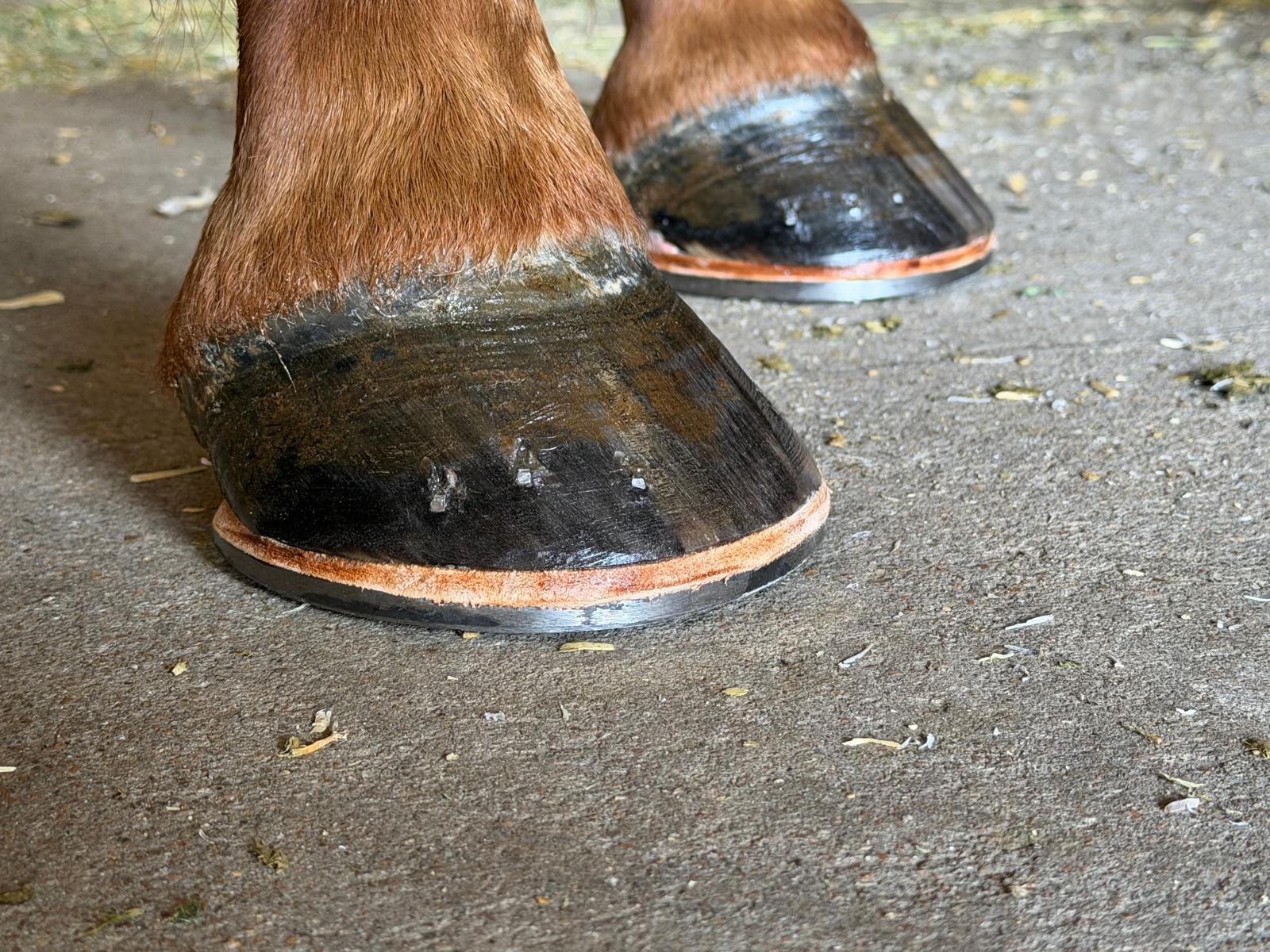
Hoof care should not begin only when a problem appears. Regular maintenance allows us to understand each horse’s progress and makes it easier to identify changes in the hooves over time.
At Pepe’s Horseshoeing, we seek to establish a care routine adapted to the horse’s needs and allow for consistent monitoring of its hooves.
If, during a visit, we find signs that could be related to a more complex condition, such as significant changes in balance, sensitivity, abnormal wear, cracks, or changes in movement, we can determine whether the horse requires specialized, corrective, or orthopedic service.