Acrylic Hoof Repair
Home / Acrylic Hoof Repair
Acrylic Hoof Repair
Specialized Repair and Reconstruction of Damaged Hoof Areas
The horse’s hoof is constantly exposed to weight, movement, moisture, terrain, and wear. When part of its structure is damaged, cracked, or weakened, specialized work may be necessary to protect the affected area and allow the hoof to continue growing.
At Pepe’s Horseshoeing, we offer Acrylic Hoof Repair for certain cases in which it is necessary to reconstruct, reinforce, or repair compromised areas of the hoof wall.
Our goal is to perform a carefully prepared repair that integrates with the hoof and allows the appropriate maintenance and farriery program to continue.
What Is Acrylic Hoof Repair?
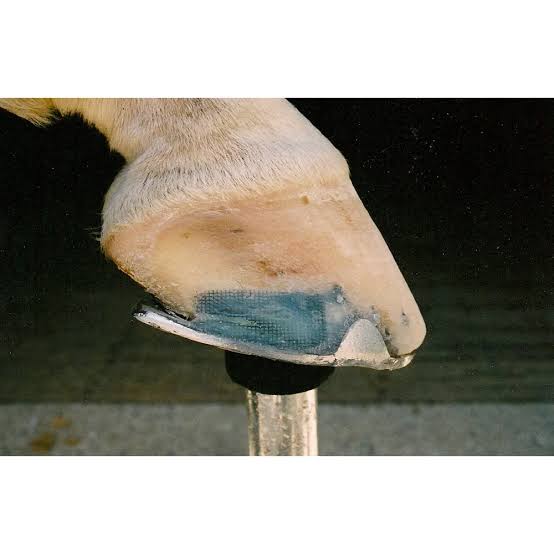
Acrylic repair is a technique used to reconstruct or reinforce certain damaged areas of the hoof wall using specialized materials.
When part of the hoof has lost material, has a crack, a weakened section, or a structural defect requiring attention, acrylic may be used to reconstruct the area when the hoof’s condition allows it.
This procedure does not replace the natural growth of the hoof. The repair functions as a supportive solution while the hoof continues developing and the affected area can gradually grow out and be replaced.
Every repair is different. Material selection, preparation, and reconstruction method depend on the specific characteristics of the damage.
When May a Repair Be Necessary?
There are different situations in which an acrylic repair may be considered.
These may include:
- Cracks in the hoof wall.
- Loss of a section of the hoof wall.
- Weakened areas.
- Localized structural damage.
- Separations requiring reconstruction.
- Loss of material following damage.
- Hooves requiring additional support in a specific area.
- Reconstruction of areas needed to continue the farriery program.
- Damage affecting the available surface for horseshoe placement.
Not all damage requires acrylic. In some cases, the best option may simply be to perform an appropriate trim and allow the hoof to grow naturally.
Evaluation Before Repair
Before performing a reconstruction, we carefully examine the hoof to determine whether acrylic repair is appropriate.
We pay attention to:
Location of the Damage: We analyze where the crack, wall loss, or weakened area is located and how it relates to the other hoof structures.
Size and Depth: We evaluate the extent of the compromised area to determine what type of repair may be necessary.
Condition of the Hoof Wall: We observe the quality and stability of the existing material surrounding the affected area.
Hoof Growth: We consider how the hoof is growing and which part of the structure may naturally recover over time.
Balance: We check whether the damage has caused changes in balance or weight-bearing distribution.
Existing Farriery: If the horse wears horseshoes, we analyze how the damage affects the current system and whether the horseshoe or application method needs to be modified.
Movement and Weight-Bearing: When conditions allow, we observe how the horse bears weight and moves.
This information allows us to determine whether a repair is appropriate and how it should be performed.
Hoof Preparation
Acrylic repair requires careful preparation.
Before applying the material, we must ensure that the area is properly prepared so that the reconstruction can adhere correctly to the appropriate surface.
The process may include:
- Cleaning: Removing dirt and loose material from the area to be repaired.
- Preparation: Conditioning the area to receive the reconstruction material.
- Removal of Compromised Material: When necessary, carefully removing unstable or loose portions.
- Surface Evaluation: Verifying that the prepared area is suitable for performing the repair.
Preparation is one of the most important parts of the procedure. An application without proper preparation may compromise the reconstruction result.
Acrylic Application
Once the area has been prepared, we apply the specialized material according to the characteristics of the damage.
The goal is to reconstruct the missing or weakened portion in a controlled manner, seeking to create a new structure with a shape compatible with the existing hoof.
Application requires precision to avoid creating unnecessary pressure areas or negatively altering the shape of the hoof.
We work carefully around the affected area to achieve an appropriate transition between the repair material and the natural structure.
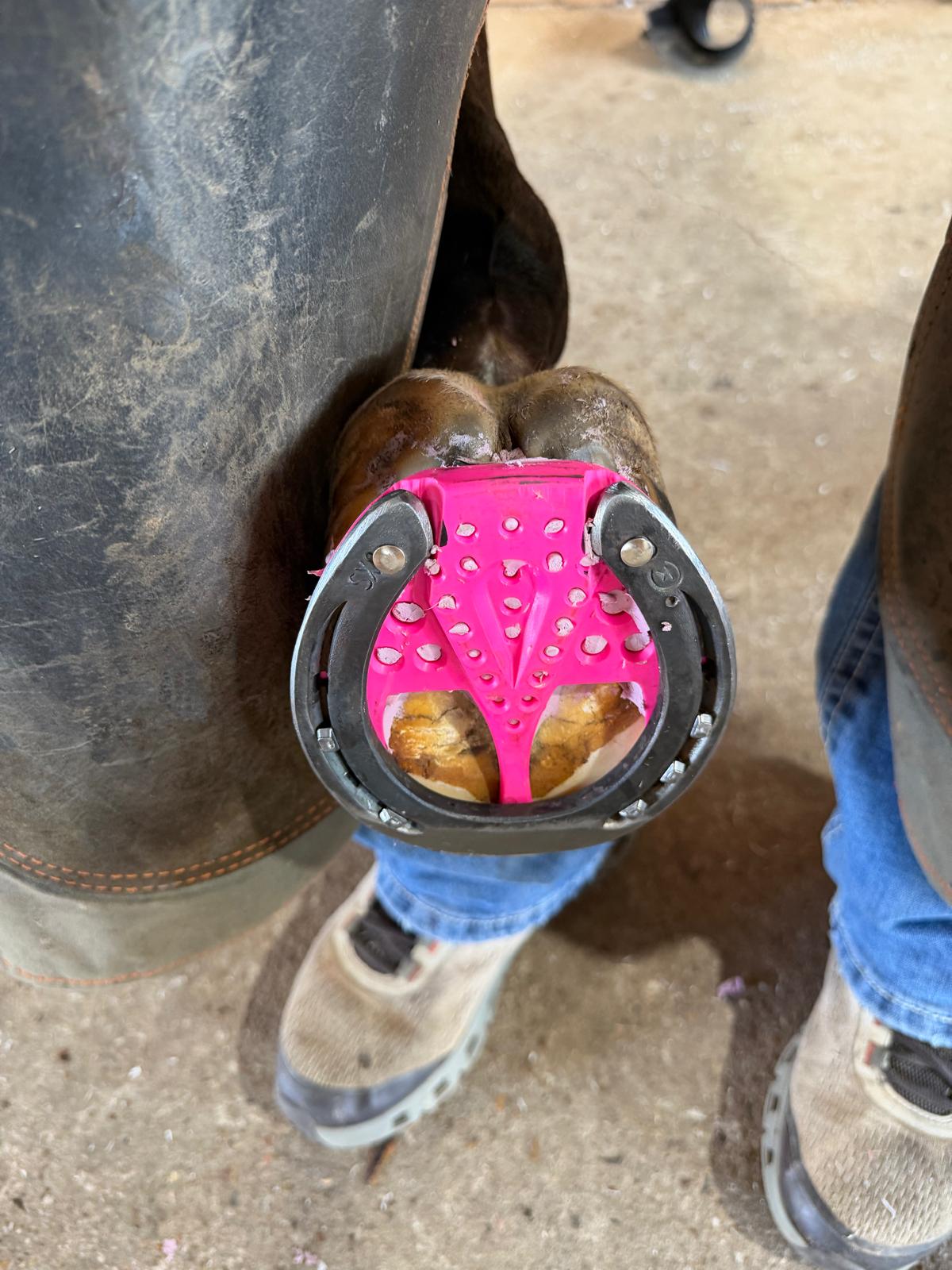
Hoof Wall Reconstruction
When part of the hoof wall is missing, acrylic may allow us to reconstruct part of the surface that is no longer present.
The reconstruction is performed while considering:
- Natural hoof shape.
- Growth direction.
- Affected area.
- Weight-bearing area.
- Farriery needs.
- Horse activity.
- Expected hoof development.
The goal is not to create an artificial structure without considering the original hoof. We seek to integrate the repair functionally with the existing structure.
Crack Repair
Cracks can vary considerably in size, location, and severity.
A small superficial crack may require different management from a larger crack that compromises a significant portion of the hoof wall.
For this reason, before deciding to perform a repair, we evaluate:
- Direction of the crack.
- Condition of the surrounding hoof wall.
- Possible movement of the affected area.
- History of the problem.
When conditions are appropriate, acrylic may be used to stabilize or reconstruct certain areas while the hoof continues to grow.
Repair and Farriery
In some cases, hoof repair is directly related to farriery work.
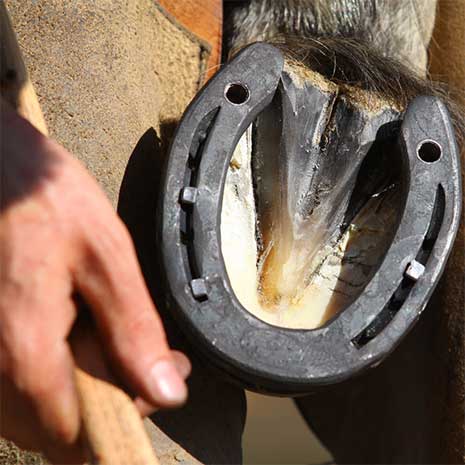
A damaged hoof wall may reduce the available surface for applying a horseshoe in the usual manner. In these situations, acrylic reconstruction may form part of a broader hoof-care strategy.
After repairing the area, we may reevaluate:
- Weight-bearing.
- Horseshoe fit.
- Nail placement.
- Hoof wall condition.
- Protection of the reconstructed area.
When appropriate, the horseshoe may also require modifications to adapt to the condition of the hoof.
Repair Follow-Up
An acrylic repair does not mean that the problem has permanently disappeared.
The hoof continues to grow, and the reconstructed area changes as the growth cycle progresses.
For this reason, periodic evaluations are important to monitor:
- Hoof wall growth.
- Condition of the repair material.
- Development of new cracks.
- Changes in balance.
- Integrity of the reconstructed area.
- Condition of the horseshoe, if present.
- Overall hoof development.
As the hoof grows, it may be necessary to progressively reduce, modify, or remove the repair material.