Ligament Problems
Home / Ligament Problems
Ligament Problems
Specialized Farriery and Hoof Balance as Part of Comprehensive Horse Management
Ligaments play a fundamental role in the horse’s locomotor system, helping stabilize and control the movement of different structures within the limbs. When a horse has a ligament-related condition, the way it bears weight and uses its limbs may change.
These changes may influence how weight is distributed across the hooves and may require specialized attention to maintain appropriate balance and support.
Our Ligament Problems service focuses on evaluating hoof condition, balance, weight-bearing, and the way the horse uses its limbs in order to adapt trimming and farriery when necessary.
The objective is for hoof care to form part of a comprehensive management approach, taking into account the horse’s condition and veterinary recommendations when a diagnosis has been established.
How Can Ligaments Be Related to the Hoof?
When a horse has an injury or condition involving a ligament, it may temporarily or persistently change the way it uses a limb.
For example, it may reduce the load on a particular area, change its stride length, or distribute weight differently among its limbs.
These changes may also be reflected in the hooves through:
- Uneven wear.
- Changes in growth.
- Balance abnormalities.
- Differences in weight-bearing.
- Changes in hoof shape.
- Increased load on certain areas.
- Changes in the way the horse moves.
- Changes in posture.
For this reason, hoof evaluation may be an important part of the overall management of a horse with a ligament-related condition.
Our Specialized Approach
At Pepe’s Horseshoeing, we understand that a horse with a ligament condition may have different needs than a horse without locomotor problems.
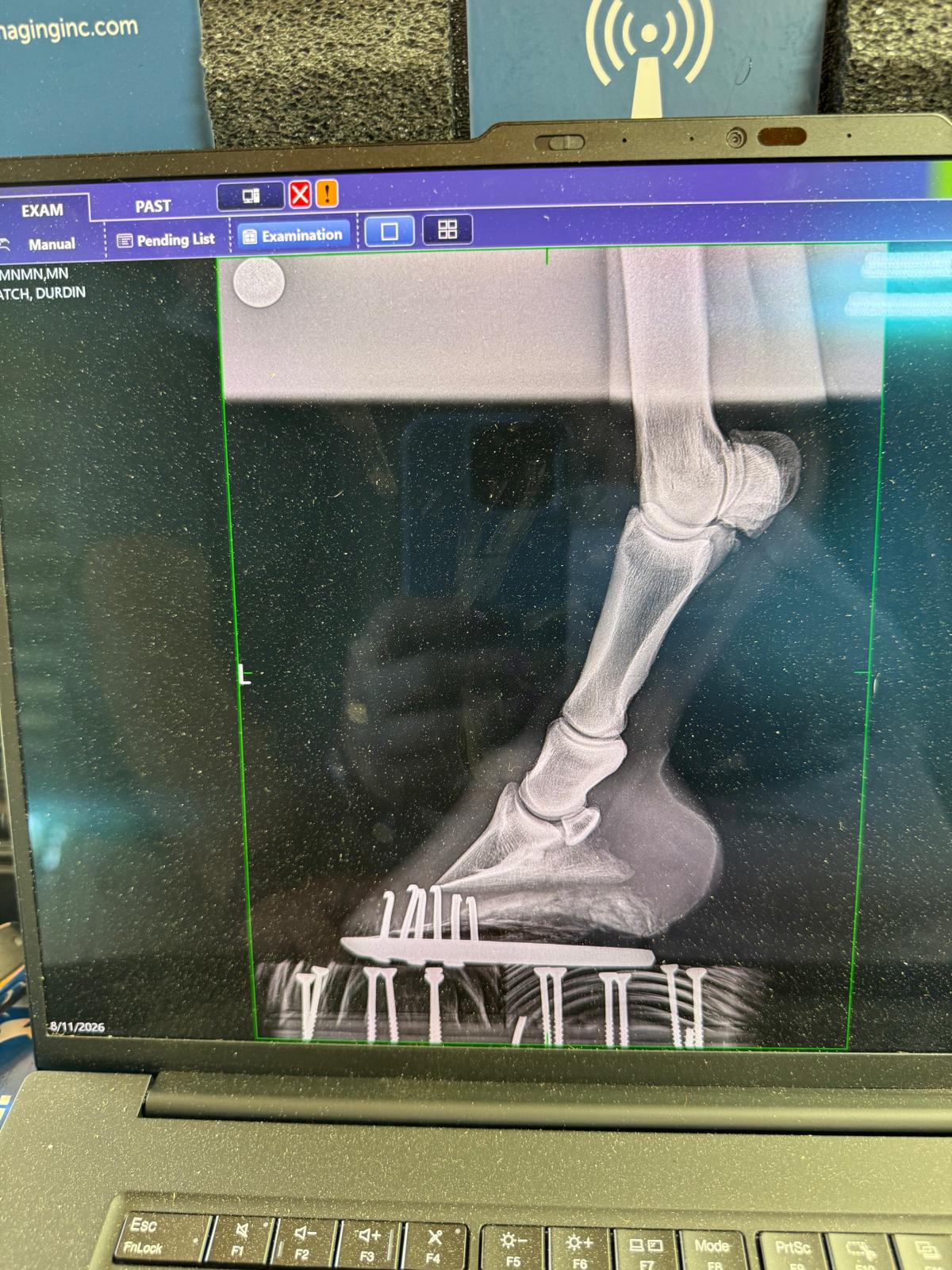
Our approach begins with a detailed hoof evaluation and continues with observation of weight-bearing and, when conditions allow, movement.
We seek to determine which hoof-related factors should be considered during the work.
Depending on the case, we may work on:
Balance: Maintaining appropriate weight-bearing distribution within the horse’s individual characteristics.
Trimming: Making carefully controlled adjustments according to hoof growth and condition.
Protection: Providing additional protection when wear or terrain requires it.
Farriery: Adapting the horseshoe when the horse’s needs justify a specialized solution.
Follow-Up: Monitoring hoof development and making progressive adjustments when necessary.
Individual Horse Evaluation
Not all ligament problems require the same farriery management.
Age, conformation, injury location, recovery stage, activity level, terrain, and hoof condition can completely change a horse’s needs.
For this reason, before performing any work, we evaluate:
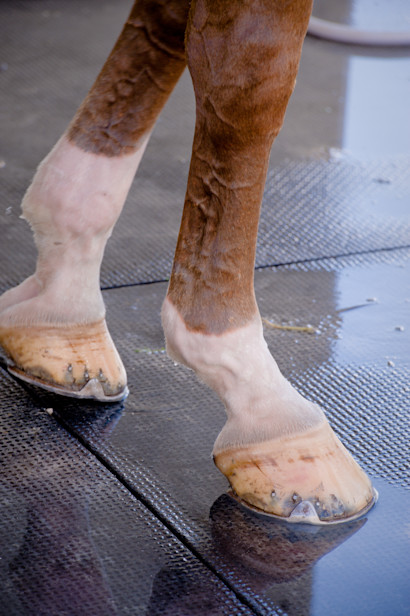
Hoof Condition: We examine the hoof wall, sole, frog, growth, wear, and any visible abnormalities.
Balance: We analyze the relationship between the different parts of the hoof and the way weight is distributed.
Conformation: We observe limb conformation and how it may relate to the weight-bearing pattern.
Weight-Bearing: We evaluate how the horse stands and distributes its weight.
Movement: When safe and appropriate, we observe the horse during movement to identify changes in the way it uses its limbs.
Existing Farriery: If the horse is shod, we inspect the horseshoe type, position, wear, and fit.
History: We consider previous work, recent changes, injury history, and available veterinary recommendations.
Hoof Balance
Balance is an essential part of our work.
In a horse with a condition involving ligaments, we seek to maintain a hoof with an appropriate weight-bearing pattern for its individual characteristics.
The goal is not to make extreme changes or attempt to modify the entire conformation of the limb through a single intervention.
Instead, we may work progressively and in a controlled manner, making adjustments that respond to hoof development and the needs established for the horse.
Specialized Trimming
Trimming can play an important role in hoof management.
When a ligament condition is present, we must be particularly careful with the amount of material removed and how weight-bearing is modified.
Our work may focus on:
- Maintaining balance.
- Controlling growth.
- Reducing excessive differences in wear.
- Maintaining appropriate length.
- Protecting important structures.
- Preparing the hoof for a specialized horseshoe.
- Progressively adapting the hoof as it develops.
Each adjustment is made while considering the horse’s current condition.
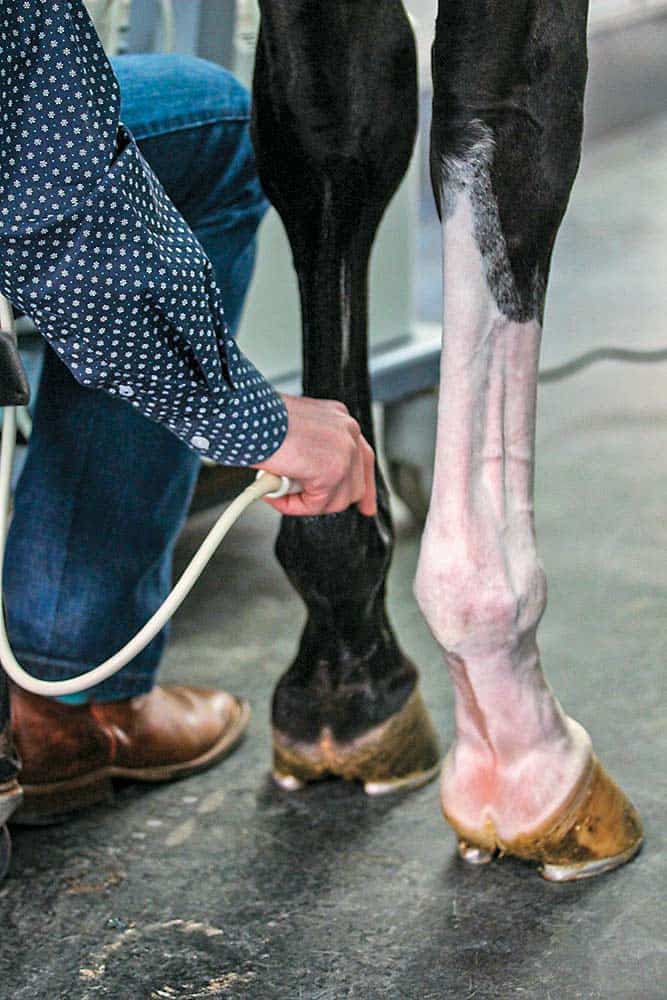
Customized Farriery for Ligament Cases
Depending on the diagnosis and the horse’s needs, it may be necessary to modify the farriery system.
In certain cases, we may use corrective or orthopedic horseshoes adapted according to the characteristics of the hoof and the established management objective.
The customization may consider:
Support: Providing an appropriate weight-bearing surface according to the identified needs.
Load Distribution: Modifying specific elements of the horseshoe to work with how the hoof receives and distributes weight.
Balance: Adapting the horseshoe to support the balance being sought during the work.
Protection: Protecting specific areas of the hoof when wear or sensitivity is present.
Fit: Ensuring that the horseshoe properly fits the shape and condition of the hoof.
The appropriate solution depends on each case. There is no universal horseshoe for all ligament-related problems.
What Conditions May Require This Type of Management?
The service may form part of the management of horses with different ligament-related conditions, provided that there is an appropriate evaluation of the situation.
Examples may include:
- Ligament injuries.
- Inflammation or pain associated with ligament structures.
- Changes in weight-bearing following an injury.
- Movement abnormalities related to a ligament condition.
- Recovery periods in which the horse requires specific hoof management.
- Balance changes resulting from prolonged changes in weight-bearing.
The farriery strategy will depend on the specific condition, diagnosis, stage of recovery, and recommendations established for the horse.
Importance of Follow-Up
Ligament-related conditions may require time to recover, and during that period, the way the horse uses its limbs may change.
Follow-up allows us to observe:
- Hoof growth.
- Horseshoe wear.
- Weight-bearing distribution.
- Changes in movement.
- Development of the hoof condition.
- Response to the work performed.
- Need to modify the ferry.
The objective is for hoof care to adapt to the different stages of the horse’s management.
Adaptation During Recovery
During recovery from a ligament injury, the horse’s needs may change.
A horse that initially requires a particular level of support may require different adjustments as its mobility improves and its activity level changes.
For this reason, our work may be performed progressively.
During each visit, we reevaluate the hoof and consider whether the current system remains appropriate.
This allows modifications to be made when necessary rather than maintaining indefinitely a configuration that was designed for an earlier stage of recovery.