Laminitis – Specialized Hoof Care
Laminitis – Specialized Hoof Care
Customized Support and Farriery for Horses Affected by Laminitis
Laminitis is a condition that can seriously compromise the structure and function of the horse’s hoof, requiring careful attention and specialized management. At Pepe’s Horseshoeing, we have extensive experience working with hoof care and cases that require a specialized approach.
Our work with horses affected by laminitis focuses on carefully evaluating the condition of the hoof, improving balance, and providing appropriate support by adapting the trim and farriery system to the specific characteristics and needs of each horse.
Every case is different. For this reason, we do not apply a standard procedure to every horse. We analyze the condition of the hoof, the way the horse bears weight, its movement, wear patterns, conformation, and other factors that may influence how the work should be performed.
What Is Laminitis?
Laminitis is a condition that affects the internal structures that help maintain the connection between the hoof wall and the structures inside the foot. It may be associated with different factors and can occur with varying degrees of severity.
A horse with laminitis may show changes in the way it walks, hoof sensitivity, difficulty moving, or changes in the way it distributes its weight. Changes in hoof growth and shape may also occur.
Because each horse may respond differently, professional evaluation is essential to determine how hoof management should be performed and what type of support may be most appropriate.
Our Approach to Horses with Laminitis
At Pepe’s Horseshoeing, our goal is to provide carefully customized farriery based on the current condition of the hoof. Before determining what procedure to perform, we observe different aspects that allow us to better understand the horse’s needs.
We evaluate hoof shape and condition, balance, growth, wear, hoof wall, sole, frog, weight-bearing, and load distribution. We also observe the horse’s posture and movement to identify how it is using its hooves.
Based on this evaluation, we determine the type of trim, support, or farriery modification that may be appropriate for the case.
The goal is not simply to apply a horseshoe, but to develop a service that takes the condition of the hoof into account and provides appropriate support as part of the horse’s management plan.

Individual Hoof Evaluation
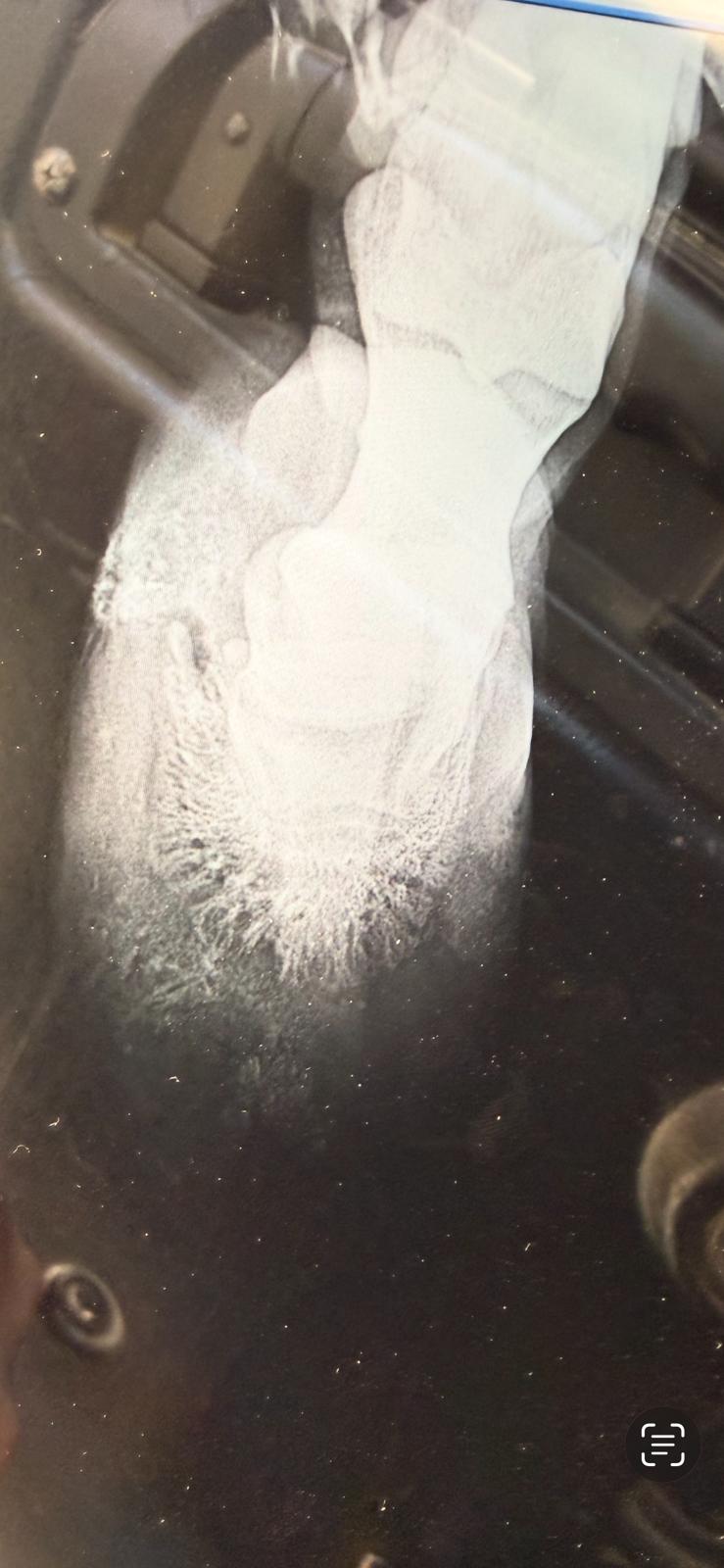
Every horse affected by laminitis needs to be evaluated individually. During our assessment, we may consider:
- Overall hoof condition.
- Hoof balance.
- Growth and wear of the hoof wall.
- Condition of the sole and frog.
- Hoof shape and conformation.
- Weight-bearing distribution.
- Posture and way of moving.
- Sensitivity or observable changes during the work.
- History of hoof problems.
- Type of activity the horse performs.
- Surface and conditions where the horse is kept.
- Changes observed since the previous farriery appointment.
This information helps us establish a more precise approach and make the necessary adjustments as the hoof develops.
Specialized Trimming and Balance
Trimming is a fundamental part of hoof management. In a horse with laminitis, the work must be performed with special care, avoiding unnecessary intervention and seeking to preserve structures that provide protection and support.
Our work may include adjustments intended to improve hoof balance and promote appropriate weight-bearing distribution according to the individual characteristics of the horse.
The amount and shape of the trim will depend on the condition of the hoof and the objective established for each case. The process is performed progressively, paying attention to the horse’s response and to the changes that occur during subsequent growth cycles.
Farriery Customized to Each Case
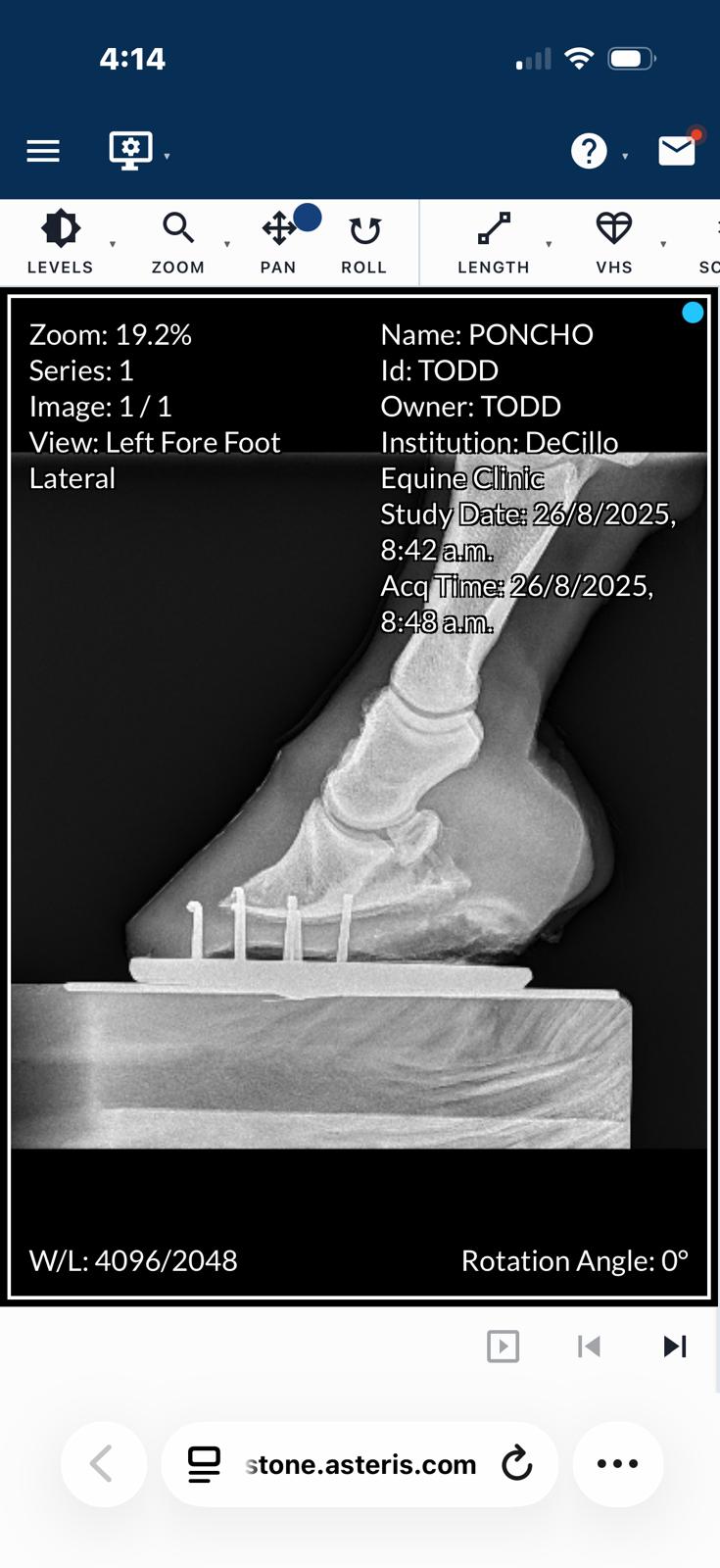
Depending on the horse’s condition, it may be necessary to use a specially customized farriery solution. In these cases, we may work with corrective or orthopedic horseshoes, making modifications to their shape, support, coverage, or position when appropriate.
The selection and customization of the horseshoe are performed while considering the condition of the hoof and the specific needs of the horse.
A horseshoe used in a case of laminitis should not be considered a universal solution. The design and application should respond to the characteristics of the hoof, the degree of involvement, and the objective established for that particular horse.
Protection and Weight-Bearing Distribution
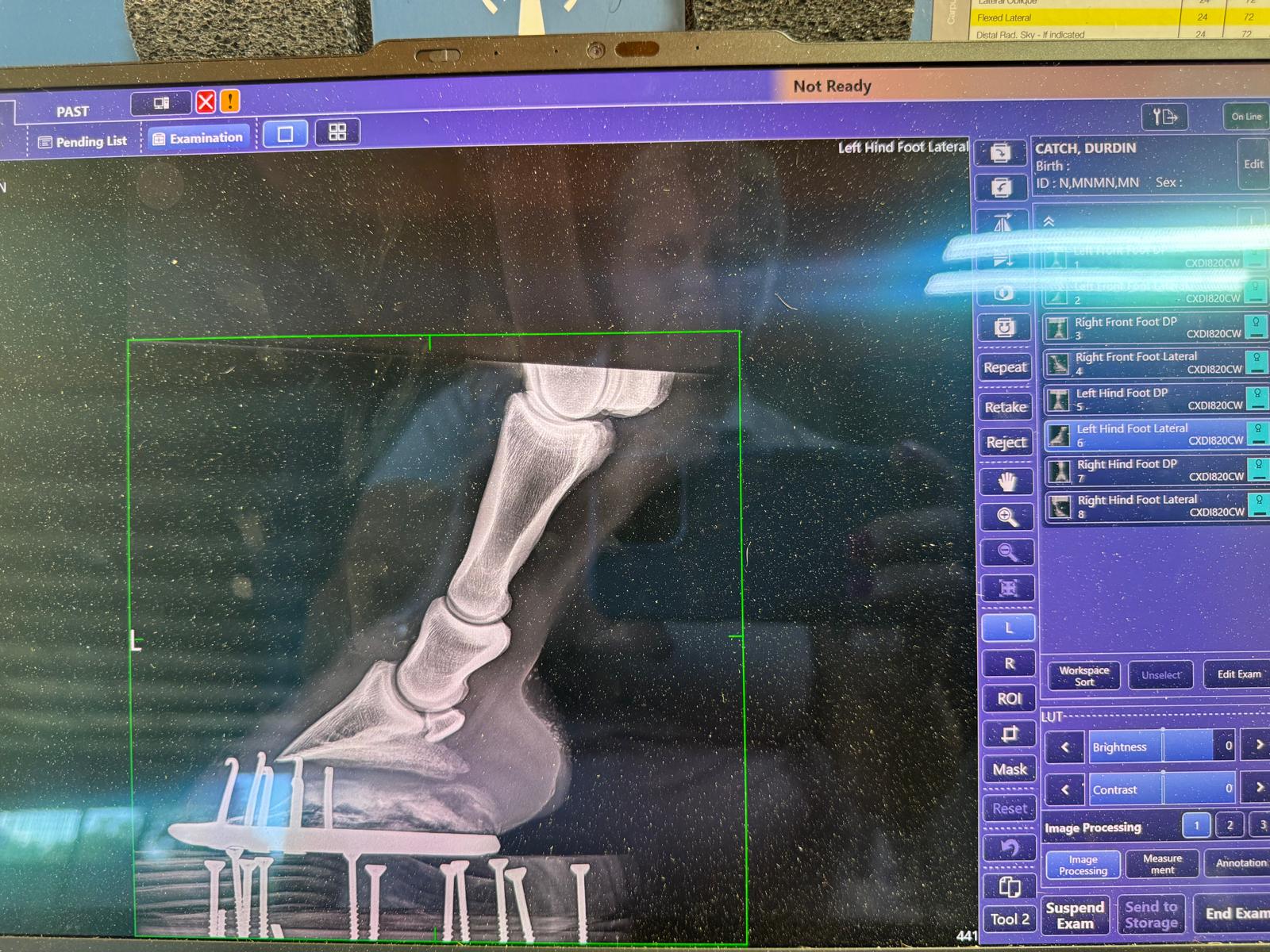
One of the important aspects of specialized work is considering how weight and support are distributed within the hoof.
Depending on the case, the farriery work may seek to:
- Provide support: Adapt the support system to the needs of the hoof.
- Improve load distribution: Make modifications that allow for more appropriate weight-bearing based on the evaluation performed.
- Protect sensitive structures: Avoid interventions that could create unnecessary pressure or discomfort.
- Promote balance: Maintain an appropriate relationship between the different structures of the hoof.
- Accompany hoof growth: Make periodic adjustments as the shape and characteristics of the hoof change.
All of this is performed individually, since the appropriate strategy may vary considerably from one horse to another.
Follow-Up and Maintenance
Caring for a horse with a history of or signs of laminitis does not end after a single appointment. The hoof continues to grow and change, making periodic evaluations important.
During each visit, we may observe hoof development, horseshoe wear, changes in the hoof wall, balance, weight-bearing conditions, and any visible changes that may require attention.
An appropriate maintenance program allows changes to be identified earlier and the work to be adjusted as the horse’s condition develops.
Specialized Care for Each Hoof
If your horse has a history of laminitis or requires specialized hoof management, at Pepe’s Horseshoeing, we can evaluate its needs and develop a farriery plan adapted to its condition.