Therapeutic Cases
Home / Therapeutic Cases
Therapeutic Cases
Specialized Farriery for Horses with Therapeutic Needs
Some horses require hoof care that differs from conventional maintenance. Conditions affecting the hoof, limb, weight-bearing, or movement may make it necessary to perform farriery work carefully adapted to the particular needs of each horse.
At Pepe’s Horseshoeing, we offer specialized care for Therapeutic Cases, developing farriery and trimming solutions adapted to the characteristics of the hoof and the specific needs of each case.
What Are Therapeutic Cases?
Therapeutic cases are those in which the horse has a condition or alteration requiring more than conventional trimming or shoeing.
In these cases, the farrier’s work may require specific modifications to hoof preparation, horseshoe design, support distribution, or protection of certain areas.
Every case is different. That is why we do not apply a standard solution.
The work design depends on the horse’s characteristics, the condition it presents, the current state of the hoof, and, when a veterinary diagnosis exists, the established management instructions.
Individualized Evaluation
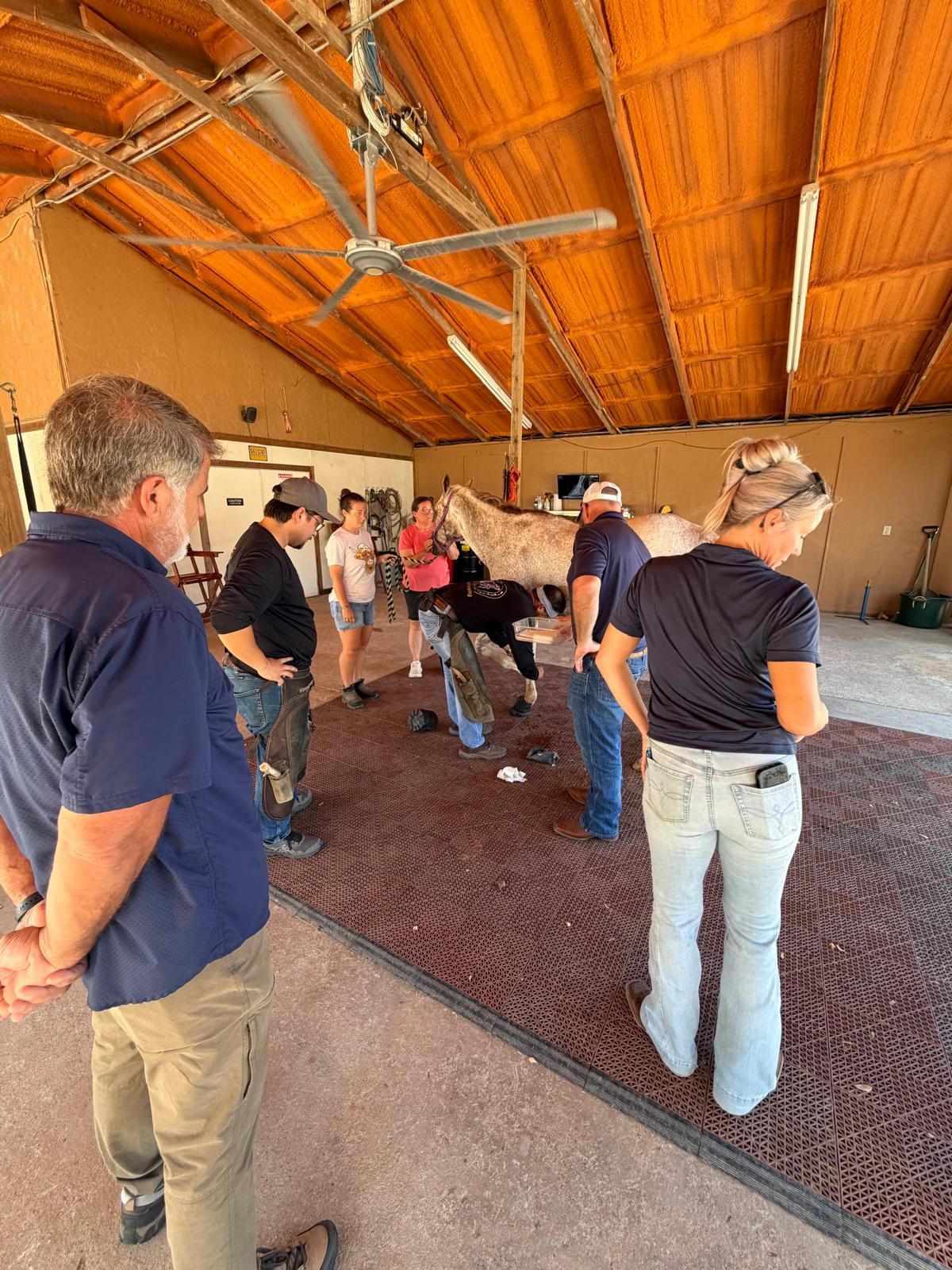
Before beginning therapeutic work, we carefully evaluate the hooves and limbs.
We pay attention to:
- Overall hoof condition.
- Shape and conformation.
- Growth and wear.
- Weight-bearing distribution.
- Hoof wall condition.
- Condition of the sole and frog.
- Movement pattern.
- Visible changes in movement.
- Activity level.
- History of hoof problems.
- Type of terrain where the horse lives and works.
When necessary, we observe the horse both at rest and in motion to obtain a more complete understanding of its needs.

Cases That May Require Therapeutic Attention
Our therapeutic work may involve different conditions related to the hoof and limbs.
Laminitis
Laminitis can cause significant changes within and around the hoof. Affected horses may require specialized management and modifications to hoof support and protection.
In these cases, farrier work is adapted to the observed condition and may be performed as part of a management plan established for the horse.
Navicular Problems
Horses with problems associated with navicular syndrome may require a specialized approach regarding hoof balance and support.
We evaluate each case individually to determine what modifications may be appropriate within the farriery work.
Lameness Problems
Lameness can have multiple causes. For this reason, proper evaluation is essential before determining any shoeing modification.
Our work focuses on the hoof and its relationship with the horse’s weight-bearing and movement. When a condition has been diagnosed, we can adapt the farriery work to the needs established for managing the case.
Angular Deviations
Angular deviations can affect limb alignment and weight-bearing distribution.
Depending on the horse’s age, conformation, and condition, trimming and farriery may require a specific approach.
Ligament-Related Problems
Some horses with ligament injuries or ligament-related conditions may need modifications to their hoof management.
In these cases, our work can be adapted to the horse’s needs and the recommendations established within its recovery or management program.
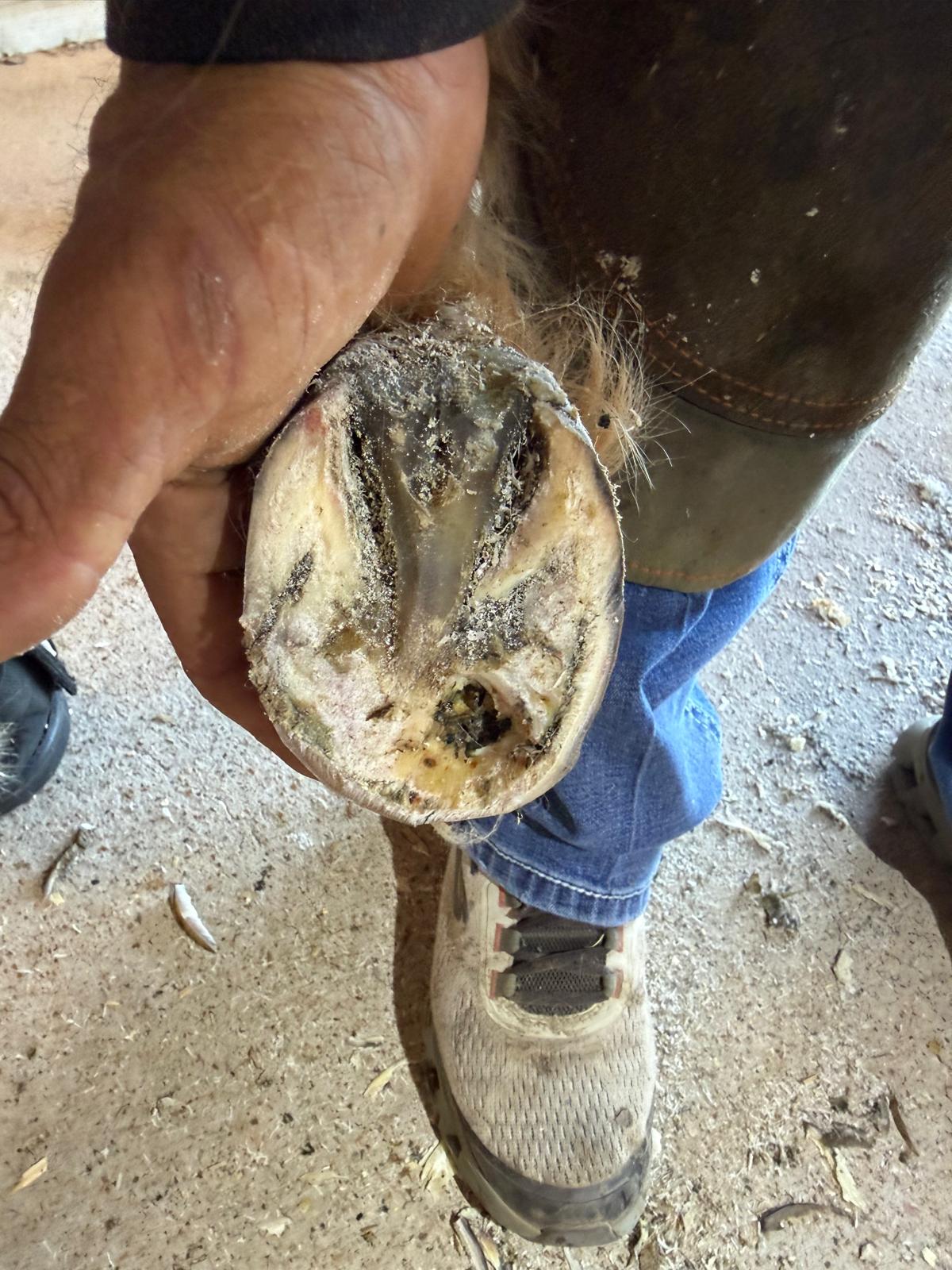
Damaged Hooves or Hooves with Structural Loss
Hooves with cracks, material loss, or significant damage may require special repair and protection techniques.
When appropriate, we can work with specialized solutions, including repair techniques using materials such as acrylic for certain damaged areas.
The Role of Therapeutic Farriery
Therapeutic farriery seeks to adapt hoof work to the particular needs of the horse.
Depending on the case, modifications may be intended to:
- Improve support.
- Modify load distribution.
- Protect sensitive or damaged areas.
- Provide a more appropriate weight-bearing surface.
- Adapt the horseshoe to the hoof’s conformation.
- Help manage certain hoof alterations.
- Complement an established recovery program.
Each modification should have a specific purpose and be performed carefully.
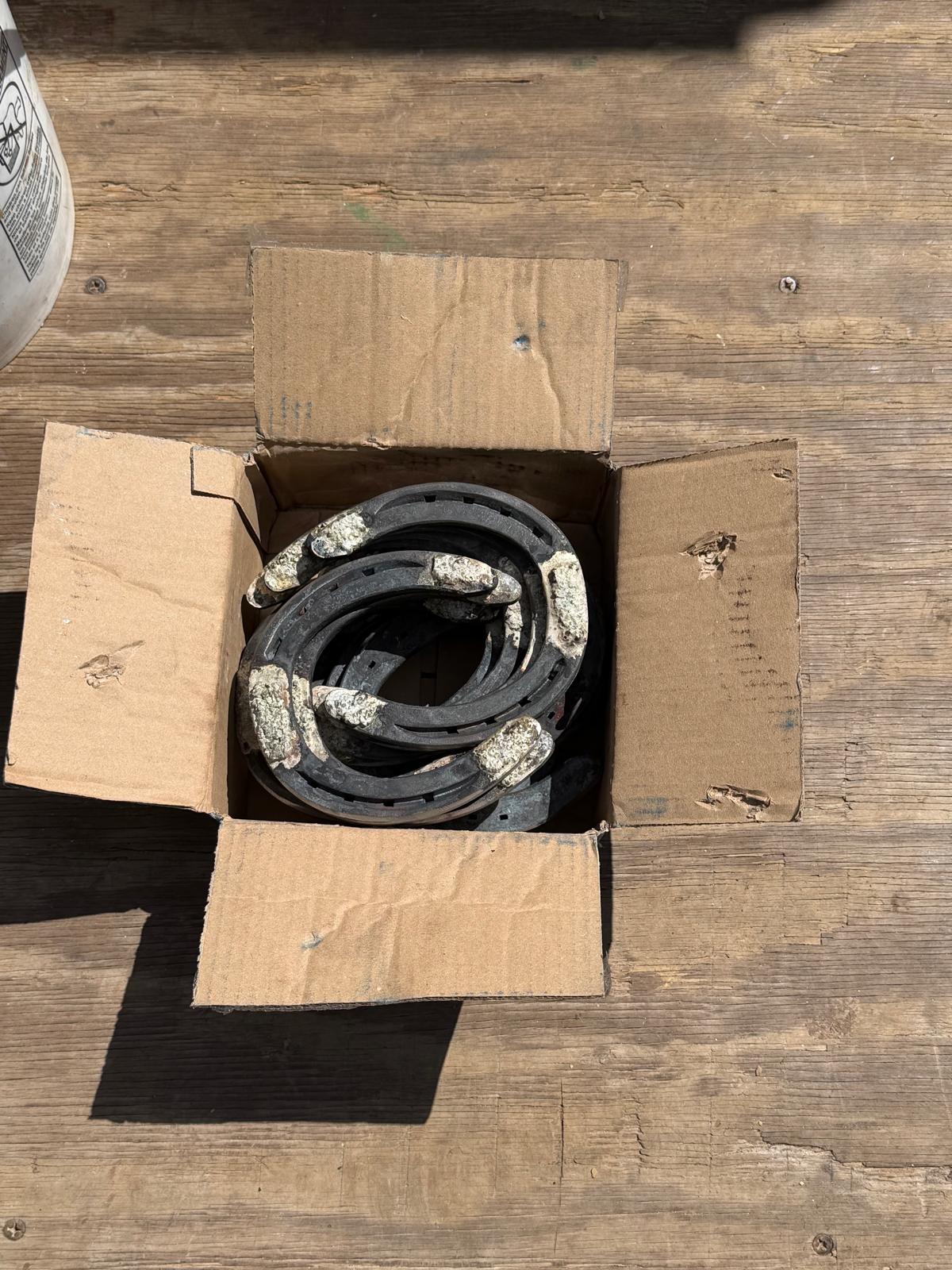
Precision Fit
Fit is one of the most important parts of the process.
A horseshoe that is too small may not provide the necessary coverage, while an incorrectly positioned horseshoe may affect the way the hoof bears weight.
For this reason, we carefully check:
- Horseshoe position.
- Fit with the hoof.
- Support distribution.
- Security of the attachment.
Our goal is to achieve a clean, stable, and functional fit.
Front & Hind Shoes for Different Needs
Our front and hind shoeing service can form part of different maintenance programs.
Depending on the horse’s characteristics, we can work with:
- Traditional front horseshoes.
- Traditional hind horseshoes.
- Adapted horseshoes.
- Horseshoes for working horses.
- Horseshoes for competition horses.
- Horseshoes for regular maintenance.
- Horseshoes requiring specific modifications.
- Complementary farriery solutions for certain cases.
When a horse has a condition requiring a corrective or orthopedic approach, we evaluate its needs to determine whether a specialized type of horseshoe should be used.
Our Therapeutic Process
- Initial Evaluation: We begin by examining the hooves and limbs to understand their current condition.
- Observation of Weight-Bearing and Movement: When the case requires it, we observe how the horse stands and how it moves.
- Review of History: We consider the hoof maintenance history and, when available, the information provided by the attending veterinarian.
- Identification of Needs: We determine the main aspects that should be considered during the work: support, protection, balance, load distribution, or hoof adaptation.
- Work Design: We select the type of trimming and horseshoe appropriate for the objective of the case.
- Hoof Preparation: We carefully perform the necessary trimming and preparation while respecting the available hoof structure.
- Horseshoe Adaptation: When a specialized horseshoe is required, we make the necessary modifications to adapt it to the hoof.
- Placement: We install the horseshoe using appropriate equine farriery techniques, paying special attention to the fit.
- Final Inspection: We check the balance, support, position, and finish of the work.
- Follow-Up: Therapeutic cases require ongoing observation. During subsequent visits, we evaluate the changes that have occurred and determine whether the work requires adjustments.
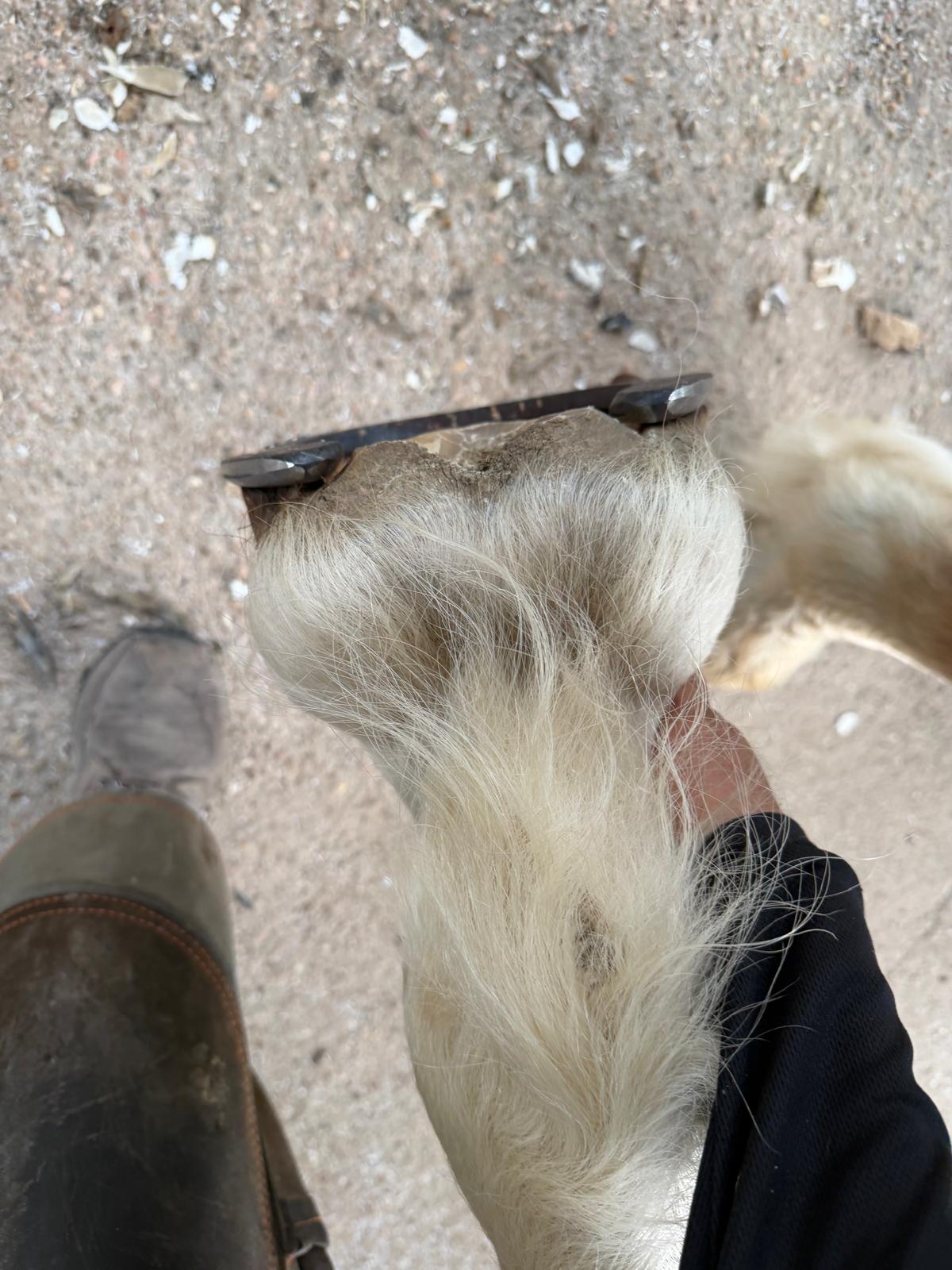
Follow-Up and Hoof Progress
Therapeutic cases can change over time. Hoof growth, wear, progression of the condition, and the horse’s activity level may make it necessary to modify the work.
For this reason, follow-up is an important part of our service.
During subsequent visits, we may observe:
- Changes in hoof growth.
- Progress in balance.
- Condition of the hoof wall.
- Horseshoe wear.
- Changes in weight-bearing.
- The horse’s response to the work.
- Need to modify the design or fit.
This follow-up allows us to adapt the work as each case progresses.
At Pepe’s Horseshoeing, we understand that therapeutic cases require patience, precision, and attention to detail.
Two horses may present similar conditions and still require different approaches because of their individual characteristics.
For this reason, we evaluate each horse as an independent case and design our work according to its needs.