Front & Hind Shoes
Home / Front & Hind Shoes
Front & Hind Shoes
Specialized Shoeing for the Front and Hind Limbs
The horse’s front and hind limbs perform different functions during weight-bearing and movement. For this reason, farriery work should not treat all four hooves exactly the same way.
At Pepe’s Horseshoeing, we offer professional Front & Hind Shoes services, including the preparation, placement, and adjustment of front and hind shoes according to the individual characteristics of each hoof and the horse’s needs.
Why Are Front and Hind Shoes Different?
Although all four limbs are part of the same locomotor system, the front and hind hooves differ in their shape, function, and participation during movement.
The front limbs support a significant portion of the horse’s body weight, while the hind limbs play a fundamental role in propulsion and generating movement.
These differences mean that the design, fit, and placement of horseshoes must take into account the specific characteristics of each limb.
At Pepe’s Horseshoeing, we evaluate each hoof individually to determine how it should be prepared and what type of horseshoe may be most appropriate.
Front Shoes – Front Horseshoes
Front shoes are designed and adapted while taking into account the shape of the front hoof, its weight-bearing function, and the particular characteristics of each horse.
During the service, we pay attention to:
- Hoof shape and size.
- Limb balance.
- Growth and wear.
- Weight-bearing distribution.
- Limb conformation.
- Horse movement.
- Type of activity.
- Surface on which the horse works.
The goal is to achieve a properly adapted horseshoe that provides protection and support without unnecessarily interfering with the natural function of the hoof.
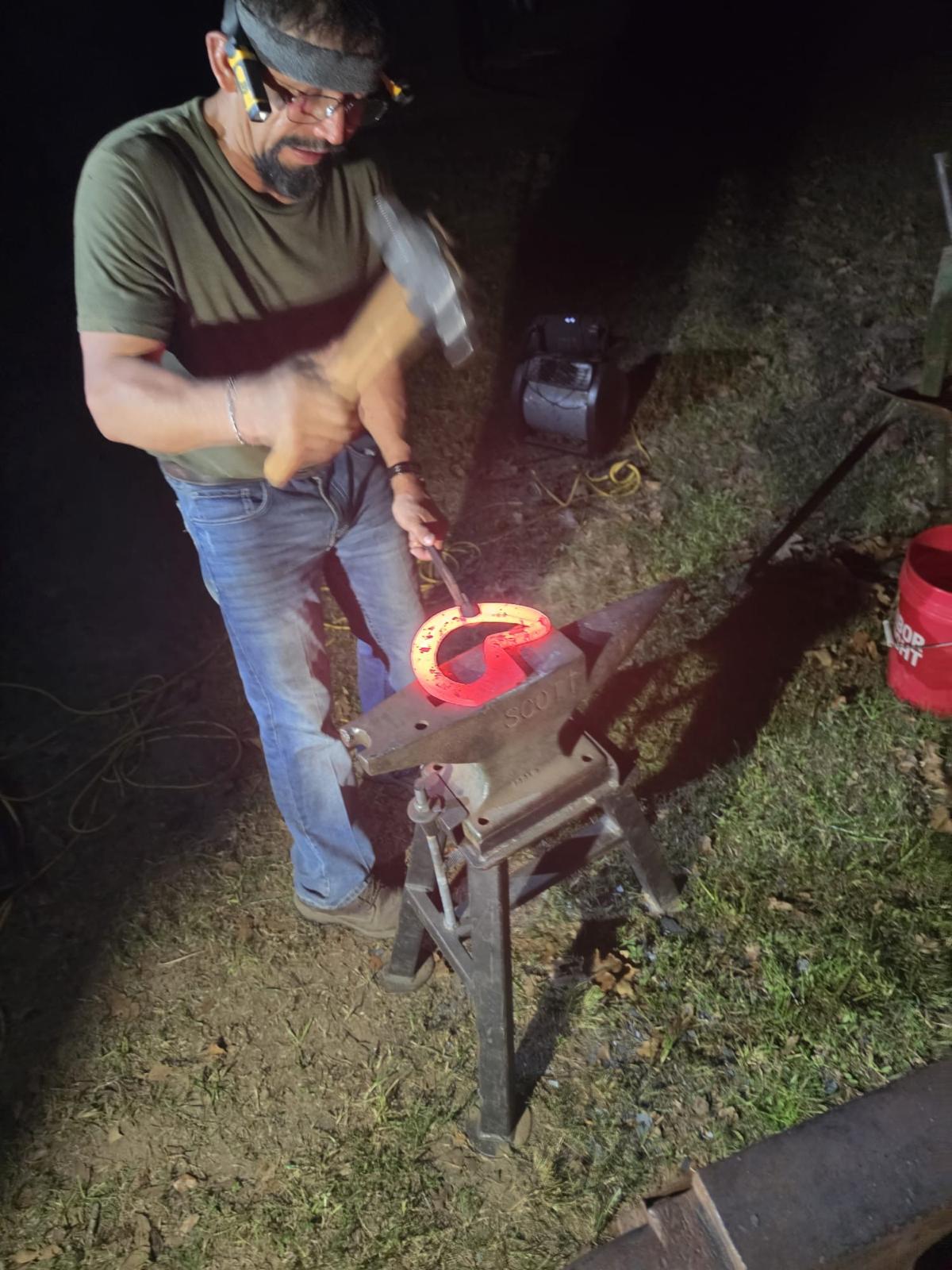

Individual Evaluation of Each Limb
We do not assume that all four hooves have exactly the same needs.
Even within the same horse, differences may exist from one hoof to another. That is why our process begins with an individual evaluation.
We observe:
- Conformation: The natural shape of each hoof and its relationship with the limb.
- Balance: The way the hoof provides a weight-bearing foundation.
- Wear: The level and pattern of natural hoof wear.
- Growth: The amount and direction of growth since the last maintenance service.
- Movement: The way the horse uses each limb during movement.
- Activity: The type and level of work the horse is subjected to.
Hoof Preparation
Before placing a horseshoe, the hoof must be properly prepared.
We perform the necessary trimming to control growth and prepare an appropriate surface for horseshoe placement.
During this process, we pay attention to the hoof structure and avoid making unnecessary modifications.
Preparation is performed according to the individual characteristics of each limb.
Horseshoe Selection and Adaptation
Once the hoof has been evaluated and prepared, we select the appropriate horseshoe for the horse and the corresponding limb.
Depending on the case, the horseshoe may require adjustments or modifications to achieve a proper fit.
We consider factors such as:
- Hoof size.
- Hoof shape.
- Activity level.
- Type of terrain.
- Need for protection.
- Movement characteristics.
- Type of work the horse performs.
A properly adapted horseshoe should provide appropriate coverage and support without compromising the function of the hoof.

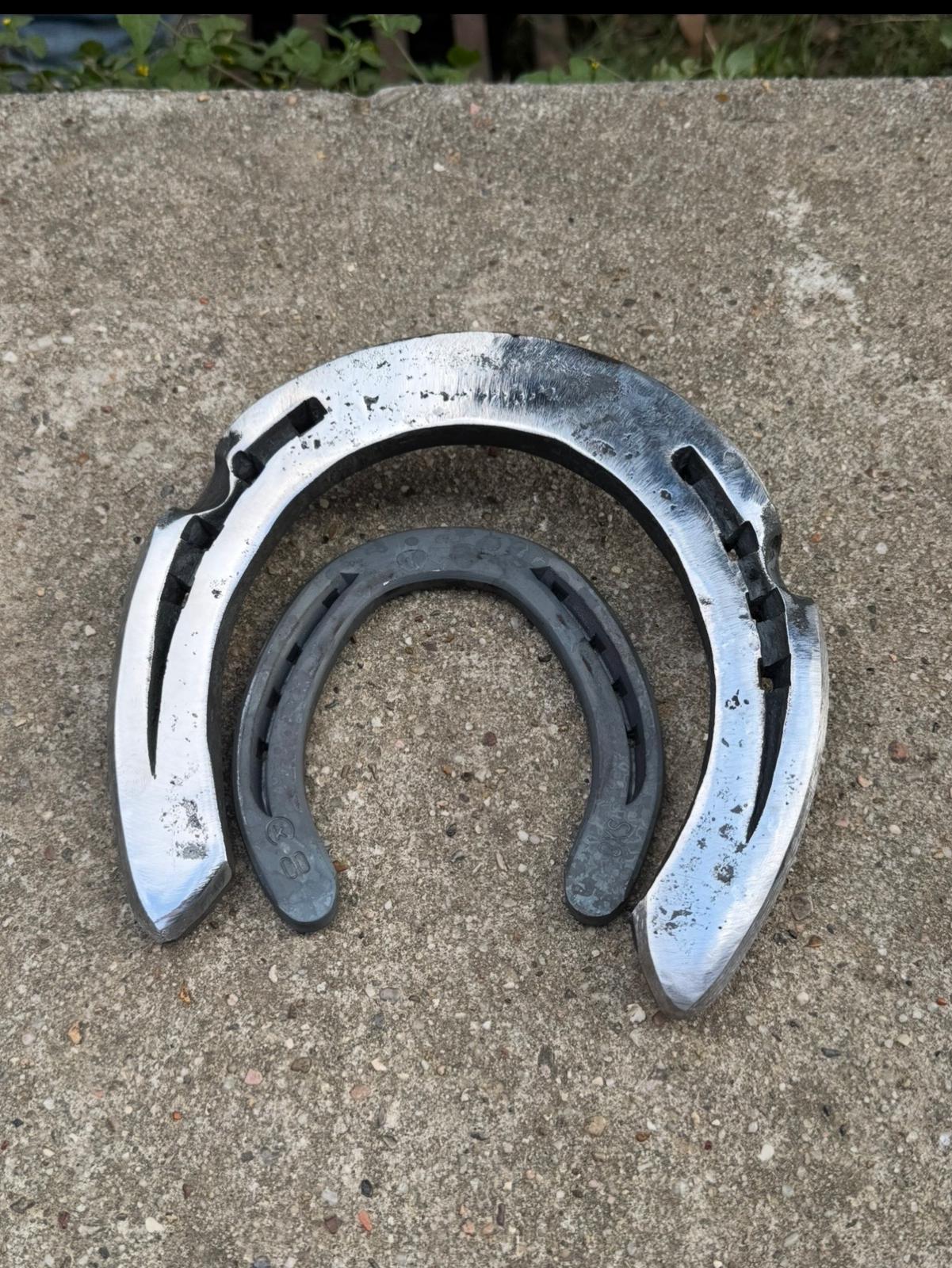
Precision Fit
Fit is one of the most important parts of the process.
A horseshoe that is too small may not provide the necessary coverage, while an incorrectly positioned horseshoe may affect the way the hoof bears weight.
For this reason, we carefully check:
- Horseshoe position.
- Fit with the hoof.
- Support distribution.
- Security of the attachment.
Our goal is to achieve a clean, stable, and functional fit.
Front & Hind Shoes for Different Needs
Our front and hind shoeing service can form part of different maintenance programs.
Depending on the horse’s characteristics, we can work with:
- Traditional front horseshoes.
- Traditional hind horseshoes.
- Adapted horseshoes.
- Horseshoes for working horses.
- Horseshoes for competition horses.
- Horseshoes for regular maintenance.
- Horseshoes requiring specific modifications.
- Complementary farriery solutions for certain cases.
When a horse has a condition requiring a corrective or orthopedic approach, we evaluate its needs to determine whether a specialized type of horseshoe should be used.
Horseshoe Placement
Once the horseshoe has been prepared and fitted, we proceed with its placement.
We work carefully during attachment to protect the integrity of the hoof and ensure that the horseshoe remains stable during the horse’s normal use.
Placement is performed while paying attention to the position and fit of each horseshoe.
Horse Inspection After Shoeing
Once the work is completed, we inspect all four hooves.
We observe the result of the work and, when appropriate, review the horse in motion to check its response to the new shoeing.
This inspection allows us to identify any adjustment that may be necessary before completing the service.
The Importance of Regular Maintenance
Shoeing should be part of an ongoing hoof-care program.
As the hoof grows, the relationship between the hoof and the horseshoe changes. Wear can also vary depending on activity and terrain.
Regular visits allow us to control these changes and maintain a maintenance program adapted to the horse’s needs.
At Pepe’s Horseshoeing, we monitor each horse’s progress to maintain a consistent care routine.