Equine Hoof Problems
Home / Equine Hoof Problems
Equine Hoof Problems
Evaluation, Trimming, Balance, and Specialized Farriery to Maintain Hoof Health and Function
The hoof is one of the most important structures for a horse’s well-being, mobility, and performance. Every step, turn, and activity the horse performs depends on its hooves being able to provide appropriate support and withstand the loads placed on the body.
When abnormalities occur in the shape, growth, balance, wear, or structure of the hoof, changes may occur in the way the horse bears weight and moves. Some problems may be obvious, while others begin with small changes that may go unnoticed.
Our Equine Hoof Problems service is designed to evaluate the individual conditions of each hoof and determine an approach that may include specialized trimming, balancing, protection, traditional horseshoes, corrective or orthopedic horseshoes, and periodic follow-up, depending on the characteristics of the case.
Our goal is to work carefully and individually, seeking to maintain a balanced, functional hoof with an appropriate support system for the horse’s needs.
Why Is It Important to Address Hoof Problems?
Hooves are constantly subjected to the horse’s weight, movement, and ground conditions. Over time, different factors can produce changes in their shape and function.
A hoof that grows irregularly, experiences uneven wear, or loses its balance may alter the way the horse distributes its weight and uses its limbs.
Factors that may influence this include:
- Irregular hoof growth.
- Excessive or uneven wear.
- Balance abnormalities.
- Hard or uneven terrain.
- Intense physical activity.
- Extended periods without maintenance.
- Injuries or damage to the hoof wall.
- Problems related to locomotion.
- Abnormal limb angulation.
- History of hoof problems.
- And more…
For this reason, professional and periodic care makes it possible to observe changes and adapt the work as the horse develops.
Hoof Repair
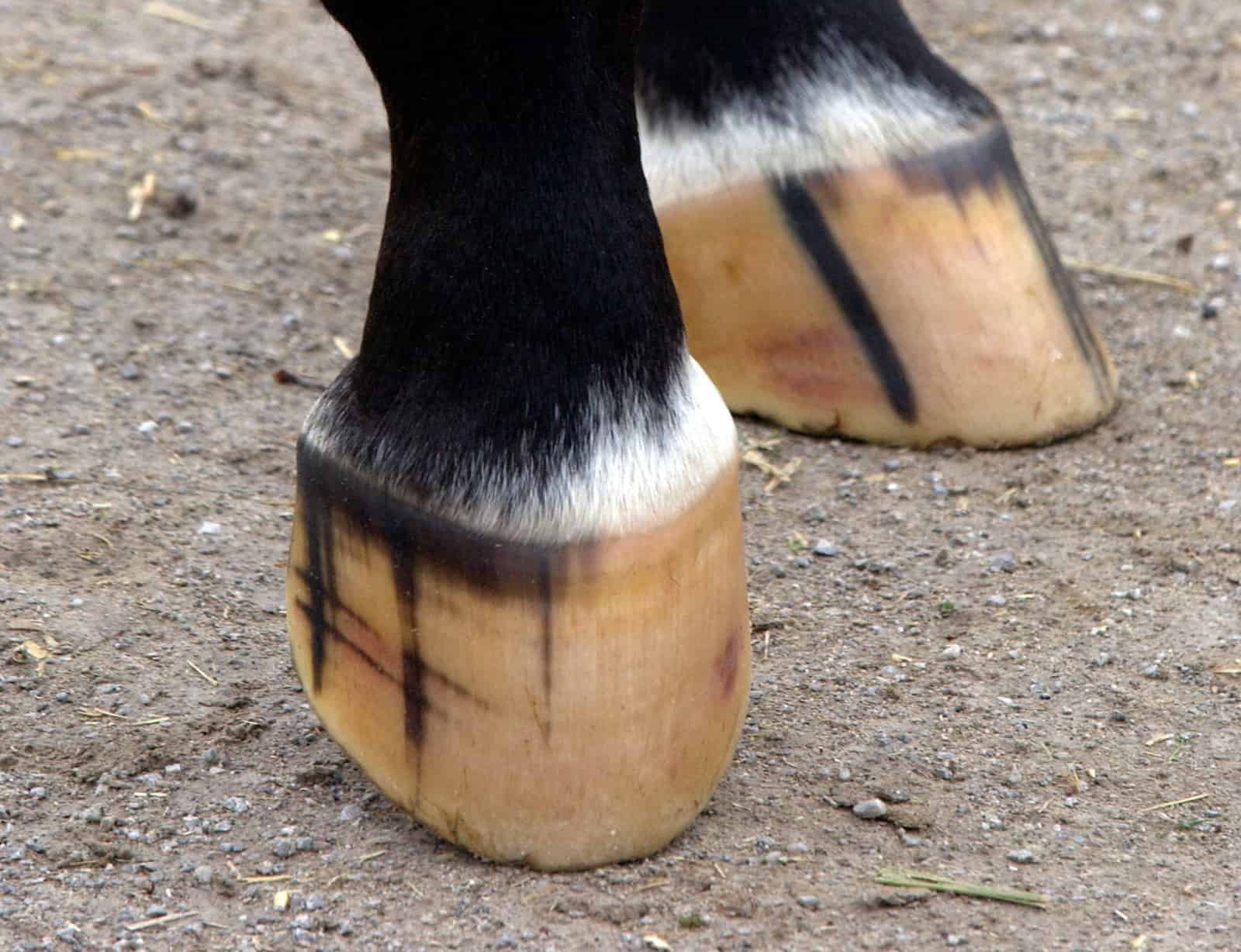
Some problems may directly affect the integrity of the hoof wall.
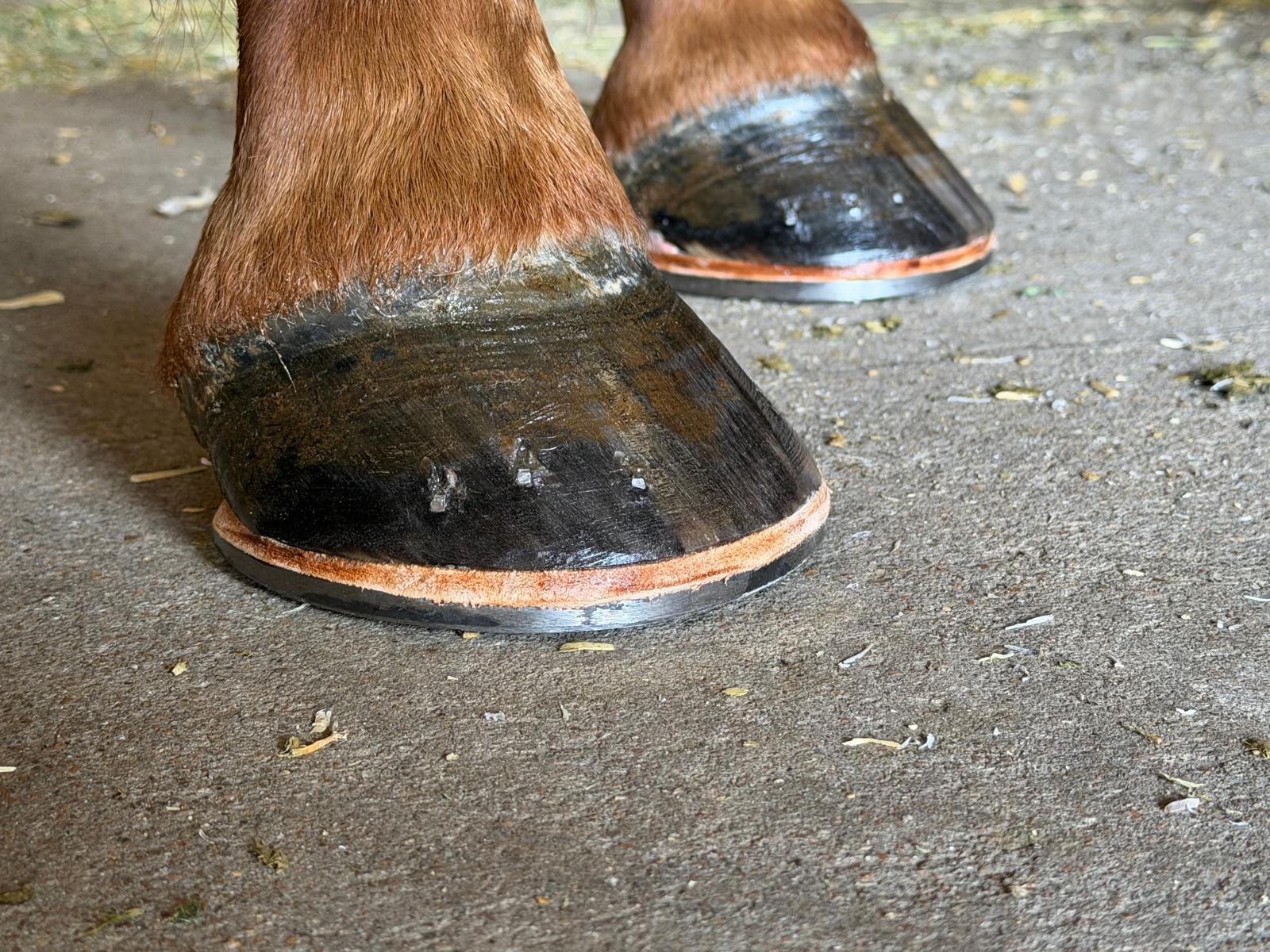
When an area is damaged or compromised, we can evaluate the possibility of performing a specialized repair. In certain cases, acrylic may be used to reconstruct or repair specific areas, provided that the condition of the hoof allows it.
The goal of this procedure is to work on the affected area and provide a surface that allows continued hoof management while the hoof grows and develops.
Each repair requires an individual evaluation to determine which procedure is appropriate.
Our Work Process
- Initial Evaluation: We begin by examining each hoof to identify its condition, structure, balance, growth, and wear.
- Horse Observation: We analyze how the horse stands and, when possible, observe its movement to understand how it is using its limbs and hooves.
- Problem Identification: We determine the main characteristics that require attention and which factors must be considered during the work.
- Objective Definition: We determine whether the service primarily requires maintenance, protection, correction, support, or a combination of these elements.
- Hoof Preparation: We clean and prepare the hoof before beginning the trim, paying particular attention to sensitive or compromised areas.
- Trimming: We trim according to the individual characteristics of the hoof, seeking to maintain appropriate balance.
- Horseshoe Adaptation: When the horse requires shoeing, we select the appropriate horseshoe and make the necessary modifications to adapt it to the hoof.
- Application: We apply the horseshoe, verifying its position, fit, support, and relationship with the hoof.
- Finishing and Inspection: We perform a final inspection to verify the fit, finish, and overall condition of the work.
- Follow-Up: During subsequent visits, we evaluate hoof development, growth, wear, balance, and response to the work to determine whether modifications are necessary.
A Different Approach for Every Horse
One of the principles of Pepe’s Horseshoeing is understanding that there is no universal solution for all hoof problems.
The age, conformation, activity, terrain, history, and condition of each horse may influence the way the work should be performed.
For this reason, two horses that present apparently similar problems may require different trimming or farriery strategies.
Our work is based on evaluating the actual characteristics of the hoof and adapting the service to the horse’s needs.
Importance of Periodic Maintenance
Hooves are constantly growing. Even after appropriate work is performed, conditions may change over time.
Periodic maintenance allows us to:
- Control hoof growth.
- Monitor balance.
- Identify changes in the hoof wall.
- Observe horseshoe wear.
- Detect changes in hoof shape.
- Adjust the work as the horse develops.
- Maintain a consistent care routine.
The service frequency will depend on the individual characteristics of the horse, its growth, activity, terrain, and hoof condition.
