Angular Limb Deviations
Home / Angular Limb Deviations
Angular Limb Deviations
Evaluation, Balance, and Specialized Farriery for Horses with Angular Deviations
Angular deviations are abnormalities in the alignment of a limb that may influence how the horse bears weight, moves, and distributes loads across its hooves. These conditions may be related to the horse’s natural conformation, development, irregular hoof growth, or other factors that must be evaluated individually.
Our Angular Deviations service is focused on carefully evaluating the relationship between the limb, hoof, balance, and weight-bearing in order to develop trimming and farriery work adapted to the characteristics of each horse.
The objective of our work is to promote appropriate hoof balance and provide a suitable support system while taking into account conformation, activity level, terrain, and the horse’s individual needs.
What Are Angular Deviations?
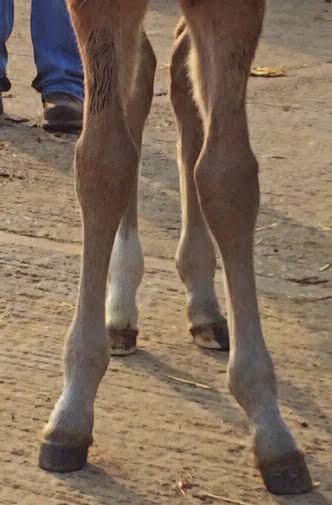
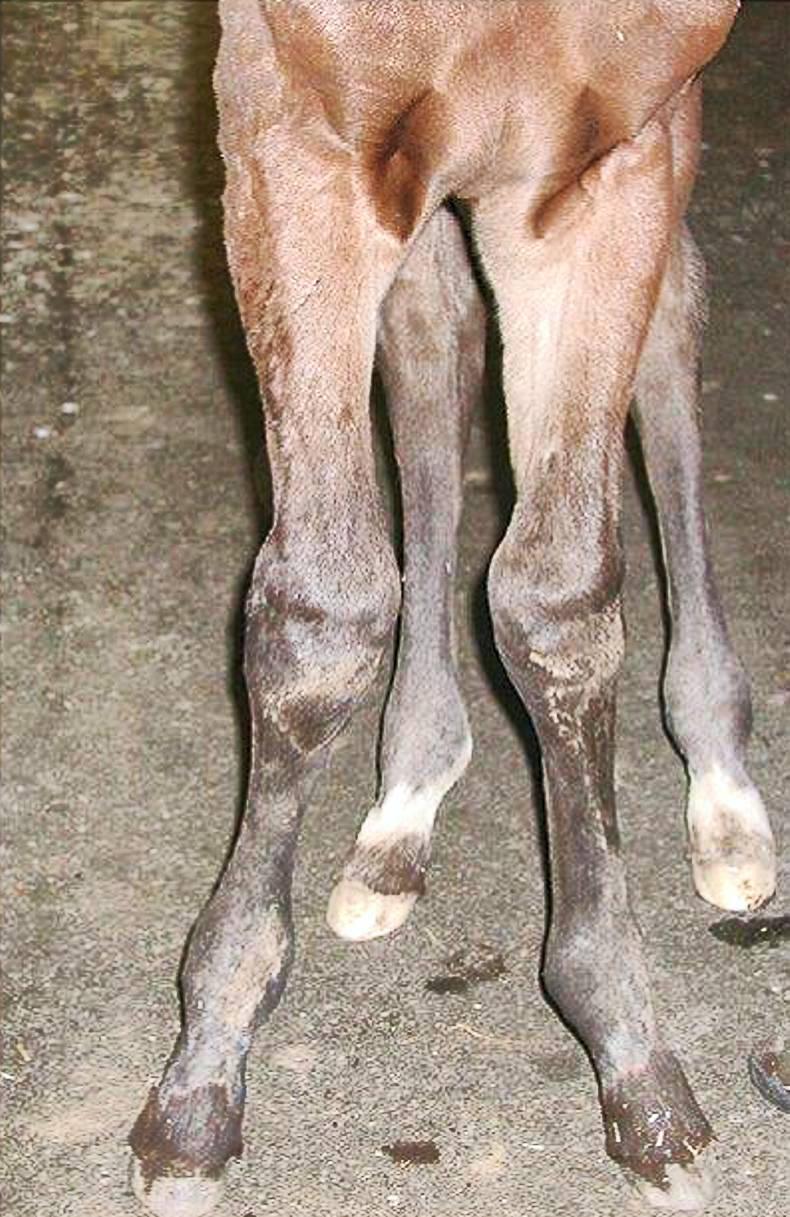
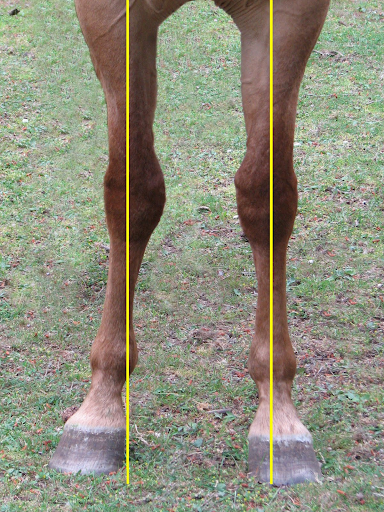
An angular deviation occurs when the alignment of a limb presents a variation from the line considered normal for that particular horse.
These variations may occur to different degrees and may affect how weight is distributed across the limb and hoof.
Some horses display certain conformation characteristics from an early age, while others may develop changes associated with growth, injuries, uneven wear, or other conditions.
It is important to understand that not all angular deviations are the same and that their management depends on factors such as the horse’s age, location of the deviation, degree of deviation, overall conformation, and hoof condition.
How Can Angular Deviations Be Related to the Hoof?
Hoof shape and balance can influence the way the horse receives and distributes loads during weight-bearing and movement.
When an angular deviation is present, different wear or growth patterns may occur in different areas of the hoof.
This may result in:
- Uneven wear.
- Irregular growth.
- Differences in weight-bearing distribution.
- Changes in hoof shape.
- Increased load on certain areas.
- Changes in the way the horse moves.
- Difficulty maintaining appropriate balance.
- Progressive changes in hoof conformation.
For this reason, periodic hoof care and professional observation are important for identifying changes and adapting the farriery work as the horse develops.
Specialized Evaluation
At Pepe’s Horseshoeing, we do not begin the work simply by observing the external shape of the hoof. We seek to understand the relationship between the hoof, limb, and the way the horse moves.
Our evaluation may include different aspects:
Limb Conformation: We observe the overall alignment of the limb and the conformation characteristics that may influence how the horse bears weight.
Hoof Shape: We analyze the shape, proportions, and growth of the hoof, looking for differences that may be related to the deviation.
Balance: We evaluate weight-bearing distribution and the relationship between the different parts of the hoof.
Growth and Wear: We observe whether certain areas have greater wear or a different growth pattern.
Hoof Wall: We examine the condition of the hoof wall, its growth direction, and possible structural changes.
Sole and Frog: We also consider the condition of the lower hoof structures to determine how they should be addressed during the work.
Movement: When conditions allow, we observe the horse walking to understand how it uses its limbs and how the hoof behaves during movement.
History: We take previous farriery work, changes observed by the owner, history of injuries, and any available veterinary information into consideration.
Hoof Balance
Balance is one of the central aspects of our work.
When an angular deviation is present, we seek to keep the hoof as balanced as possible within the individual characteristics of the limb.
This does not mean attempting to artificially change the horse’s natural conformation in a single session. In many cases, the objective is to make progressive and controlled adjustments that help maintain appropriate support and accompany hoof growth.
Trimming must be performed carefully, considering the existing structures and avoiding excessive corrections that could create new changes in weight-bearing.
Specialized Trimming
Trimming in cases of angular deviations requires precision and a clear understanding of how the hoof is growing.
During the service, we may work on aspects such as:
- Controlling excessive growth.
- Maintaining balance.
- Adjusting hoof length.
- Appropriate weight-bearing distribution.
- Controlling uneven wear.
- Preserving necessary structures.
- Preparing the hoof for specialized horseshoes when necessary.
Each adjustment is performed according to the current condition of the hoof.
The objective is to avoid an aggressive approach and work progressively, observing how the horse responds and how the hoof develops between visits.
Corrective and Specialized Horseshoes
Depending on the characteristics of the case, an angular deviation may require an adapted horseshoe.
At Pepe’s Horseshoeing, we can work with corrective or orthopedic horseshoes, making specific modifications according to the objective established for each horse.
The customization may consider:
Horseshoe Shape: The shape may be modified to fit the particular geometry of the hoof.
Support Distribution: Coverage and support may be adjusted according to the needs identified during the evaluation.
Position: The placement of the horseshoe is determined by considering hoof balance and the objective of the work.
Specific Modifications: In certain cases, changes may be made to the horseshoe to adapt it to the characteristics of the hoof and the established management strategy.
The purpose is not to use a particular horseshoe simply because an angular deviation exists. The horseshoe must be selected and adapted according to the horse and its specific condition.
Progressive and Personalized Work
One of the most important characteristics of managing angular deviations is understanding that changes should be made carefully.
Attempting to make significant modifications suddenly may alter the way the horse distributes its loads.
For this reason, our approach may include progressive adjustments, allowing us to evaluate hoof growth and make modifications during subsequent maintenance cycles.
Development is continuously monitored to determine whether the approach being used should be maintained, adjusted, or modified.
Young Horses and Adult Horses
Angular deviations may occur at different stages of a horse’s life, but the needs are not the same in a young horse as in an adult horse.
In young horses, limb growth and development are important factors that must be considered. In these cases, veterinary evaluation may be especially relevant in determining the origin and development of the deviation.
In adult horses, the approach may be more related to maintaining balance, weight-bearing distribution, comfort, and hoof function.
In both cases, the farriery work must be adapted to the individual characteristics of the horse.
Specialized Care for Angular Deviations
If your horse has an angular deviation, irregular hoof growth, uneven wear, or requires specialized work to improve balance and support, at Pepe’s Horseshoeing, we can assist you with its needs.